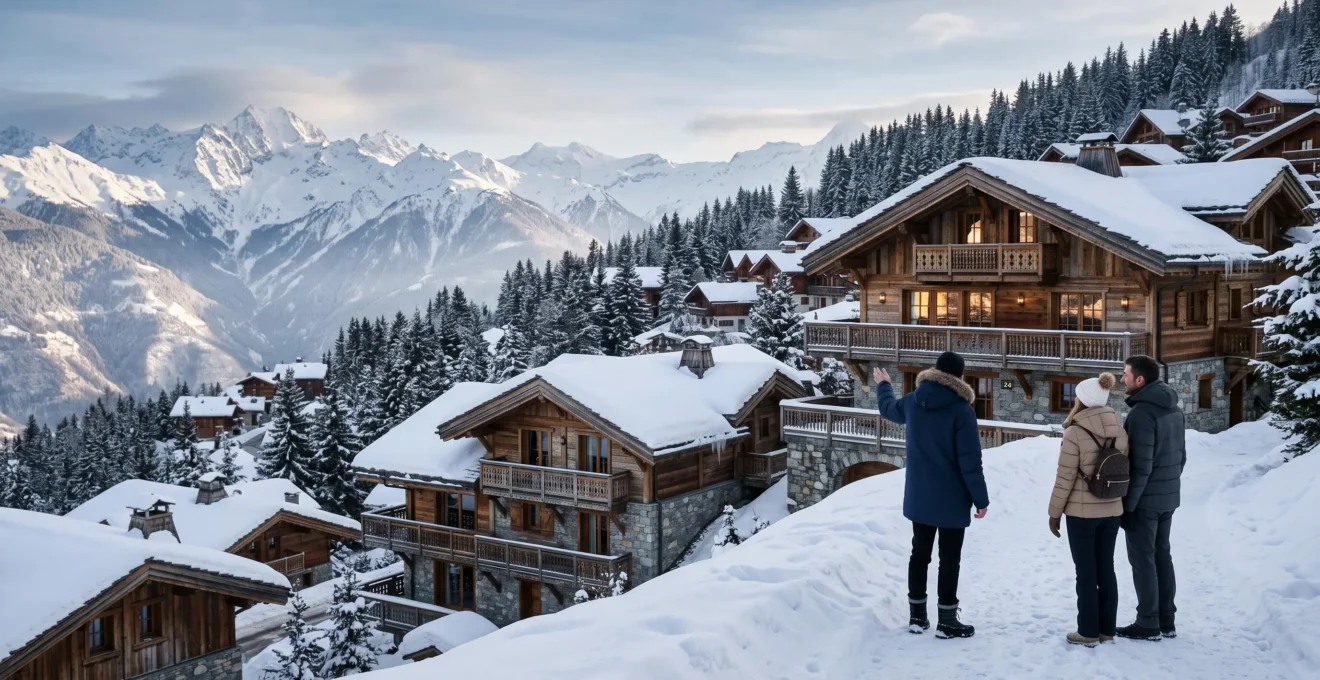
Investing in luxury real estate in Courchevel offers international buyers access to one of the French Alps’ most prestigious ski resorts, yet the market’s structure and pricing can appear opaque to those unfamiliar with the local landscape. Understanding the four distinct altitude villages—Courchevel 1850, 1650, 1550 and 1300—and their respective price dynamics is essential to calibrating your budget and identifying a property suited to your goals, whether personal use or seasonal rental. Beyond the displayed asking price, buyers must account for French acquisition costs, navigate the notaire-led purchase process, and understand the regulatory framework for non-residents.
This guide explains how the Courchevel property market operates, what different property types actually cost when all fees are included, and which steps secure a well-informed purchase in the French Alps.
Luxury Courchevel real estate: what the market looks like in the French Alps
Direct answer: Courchevel comprises four altitude villages (1850, 1650, 1550, 1300) within the Les Trois Vallées ski area, each with distinct property price levels and buyer profiles. The highest village, Courchevel 1850, commands premium prices for ski-in/ski-out access and international prestige, whilst lower villages offer more accessible entry points into the same resort ecosystem.
Courchevel sits at the heart of Les Trois Vallées, the world’s largest linked ski domain, which draws affluent skiers seeking reliable snow cover, extensive terrain and upscale amenities. The resort’s reputation rests on consistent investment in lift infrastructure, grooming and high-end hospitality, factors that underpin sustained demand from international property buyers. Unlike generic alpine real estate markets, Courchevel’s structure is defined by its four villages, each positioned at a different altitude and each attracting a distinct segment of the market.
Courchevel 1850, the highest and most internationally recognised village, concentrates luxury chalets, Michelin-starred dining and direct piste access. Property prices here reflect this exclusivity, appealing primarily to buyers prioritising prestige and convenience. Courchevel 1650 (formerly known as Courchevel Moriond) offers a quieter, family-oriented atmosphere with good ski connections, typically at lower prices per square metre. Courchevel 1550 (Le Praz) retains a traditional Savoyard village character and hosted Olympic ski-jumping facilities, attracting buyers seeking authenticity alongside resort amenities. Courchevel 1300 (Le Praz-Courchevel or La Tania), the entry-level village, provides the most accessible pricing whilst maintaining lift-linked access to the wider domain.
International buyers—particularly from the UK, Belgium, Switzerland and increasingly further afield—account for a significant proportion of transactions, motivated by second-home ownership for family ski holidays, rental income from seasonal letting, or a combination of both. Local agencies such as Altitude Courchevel Immobilier report property enquiries spanning furnished studios at approximately €472,500 through to expansive family chalets exceeding €7 million, illustrating the breadth of budgets the market accommodates.
The four-village structure allows buyers to calibrate their investment according to budget, usage frequency and rental ambitions. A studio in Courchevel 1300 might suit an investor targeting seasonal rental income, whilst a multi-bedroom apartment in Courchevel 1850 serves families prioritising personal ski access and prestige. Recognising these dynamics before viewing properties helps avoid mismatched expectations and ensures your search focuses on the village and property type aligned with your financial capacity and lifestyle goals.
How much does an apartment in Courchevel actually cost?
One of the most common uncertainties facing international buyers is the gap between advertised property prices and the true cost of acquisition. In France, the displayed sale price does not include notaire fees, transfer duties or other charges that typically add several percentage points to the final sum you will pay.
According to an analysis of official DVF data for Courchevel, a 100 m² property priced around €13,448 per square metre typically carries roughly 8% in additional acquisition costs on top of the displayed sale price. For a resale property, these acquisition costs comprise notaire fees (including the notary’s remuneration and registration duties), land registry fees and other administrative charges. New-build properties may incur VAT instead, depending on the developer’s structure and the property’s status.
Price ranges vary considerably by altitude level and property configuration. A furnished studio of approximately 25–30 m² in Courchevel 1300 might be listed from around €472,500, offering an entry point for buyers targeting seasonal rental yields. A two-bedroom apartment of 60–75 m² in Courchevel 1650 typically commands between €900,000 and €1.5 million, depending on condition, exposure and proximity to lifts. In Courchevel 1850, equivalent-sized apartments start higher, often exceeding €2 million for prime locations with unobstructed mountain views and immediate piste access. Family chalets of 150 m² and above in premium positions can reach €5 million to well over €7 million, particularly when sold fully furnished and equipped to luxury standards.
Several factors drive these price differentials beyond altitude alone. South or west-facing exposure increases desirability due to natural light and warmth. Ski-in/ski-out access commands a significant premium, as does inclusion in a residence with concierge services, spa facilities or pool. Whether a property is sold furnished (meublé) or unfurnished also affects the asking price and the buyer’s immediate readiness to rent or occupy the apartment. Copropriété charges—the monthly fees covering building maintenance, heating, snow clearance and shared amenities—vary widely and must be factored into your running costs.
Total acquisition cost: Always calculate the full cost by adding approximately 7–8% for resale properties (or confirm the applicable rate with your notaire) to the displayed asking price, then budget separately for copropriété charges and any refurbishment or furnishing required before use or rental.
Understanding these cost layers enables you to compare properties on a like-for-like basis. An apparently lower asking price in a less-maintained building with high copropriété charges may ultimately prove less attractive than a slightly higher-priced apartment in a well-managed residence. Examining recent transaction data, either through the official French land registry (Demandes de Valeurs Foncières) or via local agencies familiar with Courchevel’s micro-markets, provides the benchmarks necessary to assess whether an asking price reflects current market conditions or represents an outlier.
Can a non-resident buy property in France?
Yes. Non-residents can purchase real estate in France without being subject to a general restriction based solely on their place of residence or nationality. For international buyers, this means that owning a house, apartment or other property in France is legally accessible, although the applicable tax and administrative rules can vary depending on the buyer’s circumstances. Buyers should therefore consider their residency status, nationality, financing arrangements and intended use of the property before proceeding with a purchase.
The notaire’s role in a French property purchase
In France, the notaire is a public officer appointed by the state who guarantees the legality of property transactions. Unlike in some other jurisdictions where solicitors represent opposing parties, the notaire acts impartially to verify the property title, conduct land registry searches, calculate and collect transfer taxes on behalf of the government, and draft the authentic deed (acte authentique) that transfers ownership. Both buyer and seller are typically represented by the same notaire, or by separate notaires who collaborate, ensuring the transaction complies with French law.
The purchase process follows a structured sequence. After agreeing terms, the parties sign a preliminary contract (compromis de vente or promesse de vente), during which the buyer typically pays a deposit of 5–10% and benefits from a statutory cooling-off period. The notaire then performs due diligence, confirms no outstanding charges or legal encumbrances affect the property, and arranges for payment of transfer duties. Several weeks to a few months later, the final signing of the acte authentique completes the sale, and ownership is registered in your name at the land registry.
Fiscal obligations for non-resident owners
Non-resident property owners in France face specific tax obligations. If you rent out your Courchevel property, rental income is subject to French income tax, even if you are not a French resident. France’s tax administration provides detailed guidance on rates and filing requirements for non-residents, and many buyers engage a French accountant to manage annual declarations and ensure compliance. You may also be liable for local property taxes (taxe foncière), an annual levy based on the property’s cadastral value, regardless of whether the property is rented or used personally.
Wealth taxes and capital gains taxes on eventual resale can also apply, with specific exemptions and reliefs depending on your country of residence and any tax treaty between that country and France. Because fiscal rules change periodically and depend on individual circumstances, professional tax advice tailored to your residency and financial situation is strongly recommended before committing to a purchase.
Seasonal rental regulations
If your investment strategy involves seasonal rentals to ski holidaymakers, France’s rules for meublés de tourisme (furnished tourist accommodation) deserve close attention. Depending on the location and type of property, owners may have to complete administrative formalities before welcoming guests. The rules have also become stricter in recent years, particularly for properties located within a copropriété, where owners renting their property as a meublé de tourisme must inform the building’s syndic. Additional registration requirements are being introduced progressively, making it essential to check the obligations applicable to the property and commune before launching a seasonal rental activity.
Rental income from seasonal letting is taxed either under the micro-BIC simplified regime (if turnover remains below certain thresholds) or the réel régime, which allows deduction of actual expenses. The choice of regime affects your net return and administrative burden, and many non-resident landlords appoint a local property manager or fiscal representative to handle bookings, maintenance and tax compliance.
Regulatory compliance is not optional: Failure to register your rental activity or comply with copropriété rules can result in fines and suspension of your rental authorisation, undermining the financial viability of a rental-focused investment.
Steps to secure the right Courchevel property for your budget and goals
Choosing a property in Courchevel requires a structured approach that balances budget, intended use and realistic expectations of rental income or personal enjoyment. The decision process begins with clarifying whether the property will primarily serve as a personal second home, a seasonal rental investment, or a combination of both.
Personal use versus rental investment
If your priority is personal ski access for family holidays, focus on properties in villages and residences that maximise convenience and comfort during your own stays. Proximity to ski lifts, après-ski amenities and the quality of the building’s shared facilities (spa, ski locker, concierge) become paramount. Rental income may be a secondary benefit during weeks you do not occupy the property, but optimising rental yield should not override your lifestyle preferences.
Conversely, if rental income is the primary objective, prioritise property types with strong rental demand: well-furnished studios and two-bedroom apartments in Courchevel 1850 or 1650 tend to attract bookings more consistently than larger chalets, which appeal to a narrower market of large groups or families. Evaluate typical rental rates for comparable properties during peak seasons (Christmas, February half-term, Easter) and quieter periods, recognising that Courchevel’s rental market is inherently seasonal. The summer season generates some income from hiking and cycling tourism, but yields remain significantly lower than winter.
A mixed-use approach—personal occupation for several weeks per year, with rental management covering the remainder—offers flexibility but requires realistic budgeting. Your personal use reduces the weeks available for rental, directly affecting gross rental income, whilst management fees, maintenance and periods of vacancy must be subtracted to estimate net returns.
Comparing properties with factual criteria
When reviewing property listings, apply a consistent set of criteria to enable like-for-like comparison. Key factors include:
- Surface area and layout: French property is measured in loi Carrez surface (excluding areas with ceiling height below 1.8 metres). Verify whether advertised surface includes balconies or terraces, which are often mentioned separately.
- Furnished or unfurnished: A meublé property sold with furniture, kitchen equipment and décor allows immediate occupation or rental, but commands a higher price. Unfurnished properties require capital outlay for furnishing before use.
- Altitude and access: Proximity to ski lifts and pistes directly influences desirability and rental appeal. Ski-in/ski-out access is a premium feature.
- Copropriété charges and services: Monthly charges vary from €200–€300 per month for basic buildings to €800 or more for luxury residences with full concierge, spa and pool. Confirm what services are included and whether charges are likely to increase.
- Exposure and views: South or west-facing apartments benefit from natural light and warmth; unobstructed mountain views add value.
- Energy performance: France mandates energy performance certificates (DPE). Properties with poor ratings may require costly retrofitting to meet evolving regulations.
Avoid relying solely on asking price as a proxy for quality. A lower-priced property in a poorly maintained building or with limited rental appeal may ultimately deliver worse value than a slightly more expensive apartment in a well-managed residence with strong occupancy history.
Working with a local agency
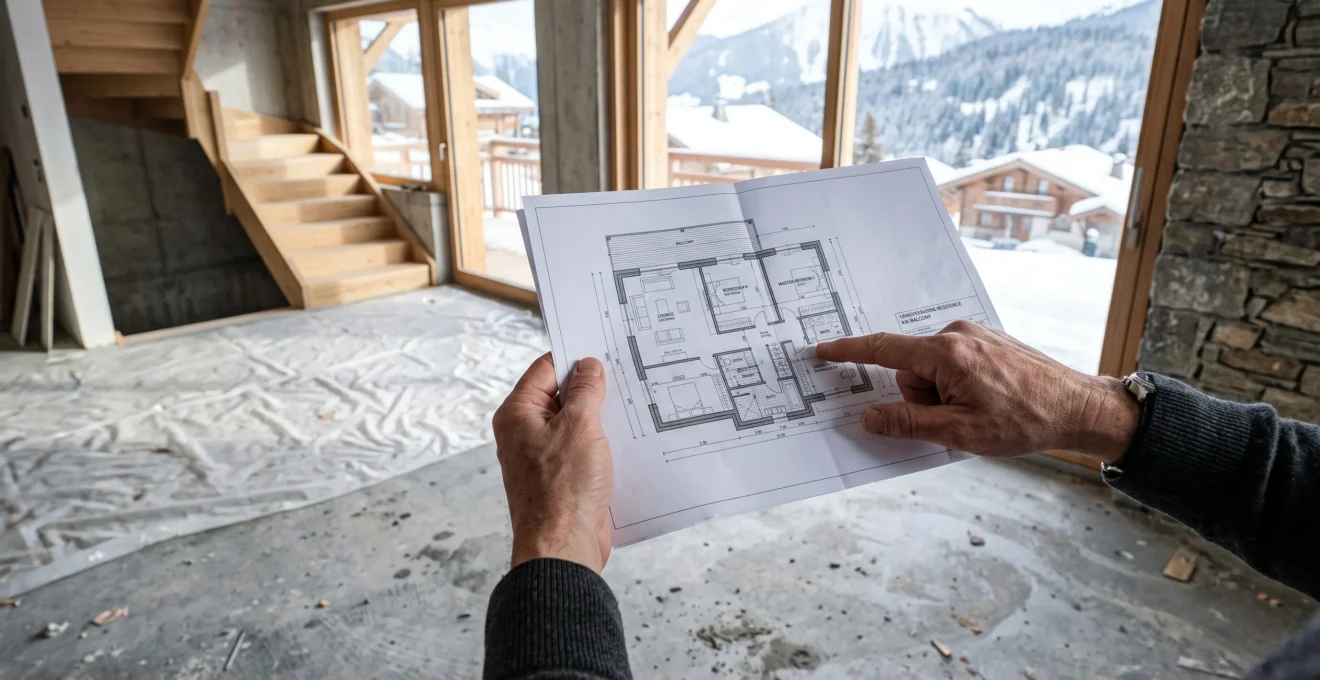
Engaging a local estate agency with established market knowledge can significantly reduce information asymmetry, particularly for international buyers unfamiliar with Courchevel’s micro-markets. A reputable local agency provides access to off-market listings, arranges viewings and coordinates with notaires, property managers and tradespeople. They can also clarify which copropriétés permit short-term rental and which impose restrictions, avoiding costly surprises after purchase.
When selecting an agency, prioritise transparency: agencies should readily explain their fee structure, provide references or testimonials from previous international clients, and demonstrate familiarity with the specific legal and fiscal considerations facing non-residents. Avoid agencies that pressure quick decisions or present unrealistic rental yield projections without substantiating assumptions.
Pre-purchase verification checklist
Before committing to a compromis de vente, ensure the following checks are completed or planned:
- Title and ownership verificationConfirm the seller holds clear title and that no liens, mortgages or legal disputes encumber the property. Your notaire conducts this search as part of standard due diligence.
- Copropriété documentationRequest recent procès-verbaux (minutes) from copropriété general meetings to identify any planned major works, disputes or financial irregularities within the building.
- Energy performance and diagnosticsFrench law requires the seller to provide a dossier of technical diagnostics, including energy performance (DPE), asbestos, lead, electrical and gas safety. Review these carefully and budget for remedial work if necessary.
- Rental history (if applicable)If purchasing a property already generating rental income, request rental accounts, occupancy rates and guest reviews to validate projected returns.
- Financing and currency considerationsIf borrowing, secure mortgage pre-approval before signing the compromis. If paying in a currency other than euros, assess exchange-rate risk and consider forward contracts to lock in rates.
Key takeaways before investing in Courchevel
Investing in Courchevel real estate demands a clear-eyed understanding of the market’s structure, cost realities and regulatory obligations. The resort’s division into four altitude villages creates distinct price tiers and buyer profiles: Courchevel 1850 commands premium pricing for prestige and ski-in/ski-out access, whilst Courchevel 1300 offers a more accessible entry point into the same domain. Recognising these dynamics allows you to calibrate your search to match your budget and usage intentions.
Displayed asking prices represent only part of the total cost. Acquisition expenses—notaire fees, transfer duties, registration—typically add 7–8% for resale properties, and ongoing copropriété charges vary widely depending on the residence’s services and maintenance standards. Calculating total cost before making an offer avoids budget overruns and ensures you compare properties on a consistent basis.
Non-residents are permitted to buy French property without fundamental restriction, but must navigate a notaire-led legal process, comply with fiscal obligations including income tax on rental income and local property taxes, and register seasonal rental activity with the local town hall where required. Engaging professional advice—a notaire, a French tax accountant and, where relevant, a local property manager—reduces compliance risk and ensures you understand the full scope of your obligations before signing.
Critical checks before purchase
- Verify the total acquisition cost, including notaire fees and transfer duties, not just the asking price
- Confirm copropriété charges and any planned major works that could increase costs
- Understand your fiscal obligations as a non-resident, especially if renting out the property
- Ensure the property and copropriété permit seasonal rental if that is part of your strategy
- Obtain and review all mandatory diagnostics (DPE, asbestos, electrical safety) before signing
Is rental income from a Courchevel property reliable?
Seasonal rental income in Courchevel is inherently variable. Peak winter weeks (Christmas, February half-term, Easter) generate the majority of annual rental revenue, whilst summer and shoulder seasons contribute far less. Occupancy rates depend on property type, location within the village, furnishing quality and the effectiveness of your property manager’s marketing. Prudent financial planning assumes rental income will fluctuate and that some weeks will remain vacant despite marketing efforts. Avoid basing your purchase solely on optimistic rental projections; treat rental income as a bonus that offsets running costs rather than a guaranteed return.
What is the minimum budget to buy in Courchevel?
Entry-level studios in Courchevel 1300 or 1550 can be found from approximately €472,500, though total acquisition cost including notaire fees and furnishing (if required) will exceed €500,000. For a two-bedroom apartment suitable for family use or broader rental appeal, budgets typically start around €900,000 in Courchevel 1650 and significantly higher in Courchevel 1850. Always add 7–8% for acquisition costs and budget separately for annual copropriété charges and property management fees if renting.
Do I need to speak French to buy property in Courchevel?
Whilst many local agencies and notaires in Courchevel have experience with international clients and can communicate in English, all official legal documents—including the compromis de vente and acte authentique—will be drafted in French. It is advisable to engage a bilingual notaire or instruct a translator to ensure you fully understand the terms and obligations you are signing. Many international buyers also appoint a bilingual legal advisor or property consultant to guide them through the process and liaise with French professionals on their behalf.
Can I get a mortgage as a non-resident?
Yes, French banks and some international lenders offer mortgages to non-resident buyers, though criteria can be stricter than for French residents. Lenders typically require a larger deposit (often 30–40% rather than 20%), proof of income and assets, and may cap the loan-to-value ratio. EU nationals often find the process more straightforward than buyers from outside the EU. Obtaining mortgage pre-approval before making an offer strengthens your negotiating position and ensures you do not commit to a purchase you cannot finance.
Disclaimer: This article provides general information about the Courchevel property market and the French legal and fiscal framework for illustrative purposes. It does not constitute financial, legal or tax advice tailored to your individual circumstances. Before making any investment decision, consult qualified professionals including a notaire, a tax adviser familiar with cross-border property ownership, and, where appropriate, a financial adviser.
If you are considering Courchevel as a destination but wish to experience the resort before committing to a property purchase, exploring seasonal rental options offers valuable insight into different villages, property types and the practicalities of alpine living. A ski weekend rental allows you to test locations, assess lift access and understand which altitude level best suits your skiing ability and lifestyle preferences, informing a more confident purchase decision when you are ready to invest.